The classic microscope is no longer the sole ruler in the laboratory. Everywhere you hear about digitalization today. But what does this change actually mean for pathology? The leap into practice often fails in theory.
MVZ Niederrhein in Duisburg is leading the way and proving: Those who digitize today secure their competitiveness for tomorrow.
The Digital Quantum Leap
As the first German Telemis partner, the Duisburg institute has consistently followed this path. The centerpiece? An Image Management System (IMS) that radically simplifies workflows. In this article, we show you how the transition truly succeeds: without sugarcoating, with real solutions for hurdles, and a clear compass for anyone now ready for the digital quantum leap.
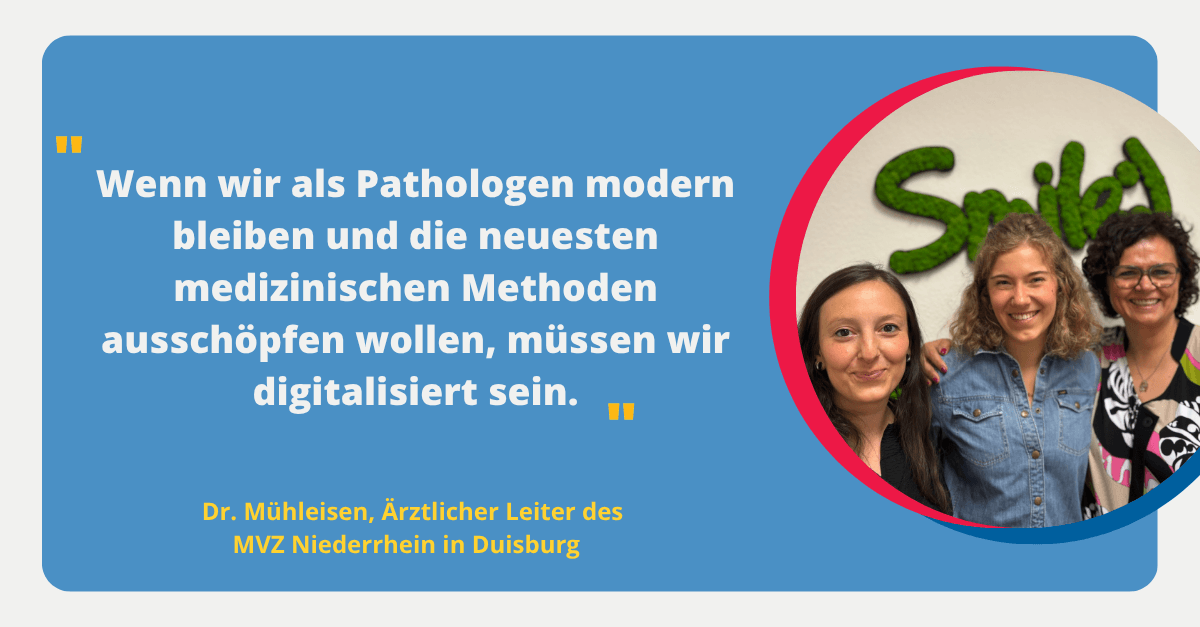
Dr. Mühleisen, Medical Director of the institute, describes his strategic and medical vision as follows: "For me, the full digitalization that had already taken place was a crucial reason to move to this institute in Duisburg. If we as pathologists want to stay modern and make the most of the latest medical methods, we must be digitalized. All forward-looking developments—from computer-aided precision diagnostics to flexible workplace models like working from home—rely on this digital core. It’s not just about replacing the microscope with a screen, but about opening up completely new dimensions of patient safety and collegial collaboration."
Why was now the right time to take the step toward digitalization?
The drivers of change in the healthcare sector are unmistakable: a continuously rising case volume, the growing shortage of pathologists, and the need to coordinate diagnoses across locations without delay. Analog processes—such as the physical mailing of glass slides for second opinions—reach their limits in connected medicine. Digitalization is no longer an optional innovation project today, but the fundamental prerequisite for future-proof diagnostics and a modern workplace culture that also makes all the difference in the fight for skilled labor.
For the Duisburg laboratory, the largely digital workflow from sample preparation to medical reporting was also a strategic magnet for top talent. New key technologies such as artificial intelligence (AI) can only be meaningfully implemented once image data is available digitally.
What were the biggest technical and human challenges during the transition?
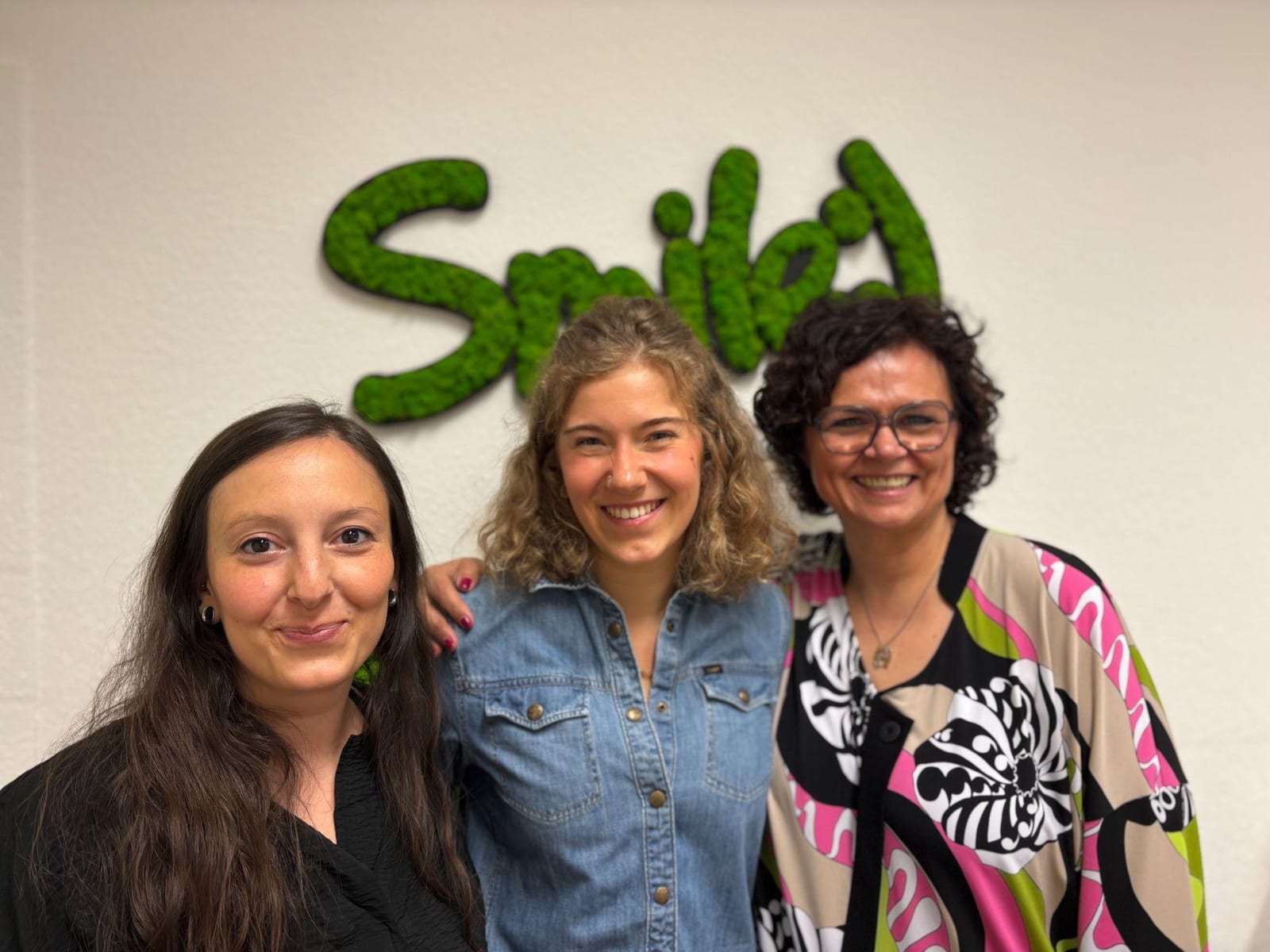
The transition to digital pathology is much more than simply acquiring high-performance scanners. It requires profound change management and strict standardization of pre-analytical processes.
A scanner forgives no mistakes: crooked barcode labels, tissue pieces outside the focus area, or dye residues on the slide inevitably lead to scanning errors.
In addition, it was necessary to win the physicians' trust in digital image quality. Especially with semi-quantitative immunohistochemical evaluations, such as for HER2 or PD-L1, there were initially questions regarding standardized display and diagnostic comparability on the monitor. Another important aspect speaking in favor of the partnership: To use the IMS solution for digital diagnostics, the laboratory had to be officially DAkkS-accredited. Through meticulous validation processes and the targeted selection of the IMS partner, this hurdle was successfully mastered. The team consciously chose against rigid monolithic systems and selected Telemis as an agile partner.
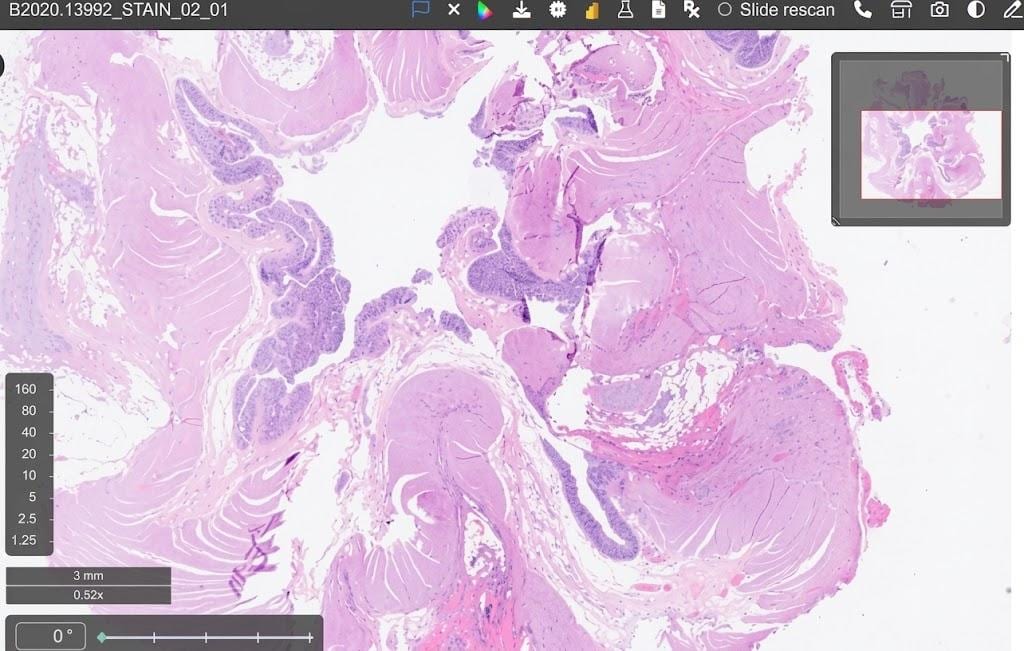
Johanna Wezgowiec, Institute Manager and driving force behind the implementation, emphasizes the organizational focus: "Digitalization doesn't start at the scanner. What matters is that the entire process—from sample reception and specimen preparation to medical reporting—is clearly defined and designed to be as uniform as possible. To achieve this, we had to adapt technical workflows, set standards, and, above all, involve the entire team at an early stage. A particular challenge was the reliable integration of the Image Management System into our Laboratory Information System. With Telemis, we found a partner who listened to our requirements and developed practical solutions together with us. Another important factor was a sufficiently long and clearly regulated transition period. It was only after the workflows were validated and the team had gained confidence that digital reporting became the standard in routine practice."
How has the everyday work of the laboratory team changed concretely?
The farewell to the analog workplace in favor of screen-based diagnostics has fundamentally revolutionized daily routines in the lab. In the past, MTAs had to sort, transport, and manually archive hundreds of physical folders containing glass slides by number every day. A misfiled glass slide not infrequently led to hours of searching throughout the entire institute.
Today, the specimens are loaded directly into the scanner. In conjunction with the LIS, the Telemis-IMS handles the automatic compilation of cases. Physicians see in real time in their digital inbox as soon as a case is completely available. In addition to the enormous logistical relief, the team benefits above all from significantly improved ergonomics—hours of rigid staring at the microscope are a thing of the past. Furthermore, the digital infrastructure enables location-independent work, which has drastically improved work-life balance.
Nadine Krompholz, Deputy Institute Manager, reports from the laboratory team's practical experience: "In the beginning, there were naturally fears about delays in turnaround times. But the exact opposite happened. In the past, we spent our evenings searching the archive for misfiled blocks—today, digital workflow management ensures that nothing gets lost anymore. For the doctors, everyday life has become much more relaxed: they no longer have to carry heavy folders and can process cases flexibly on screen—even in the home office if needed, which helps us enormously in recruiting new colleagues. The partnership with Telemis has been a stroke of luck. Our wishes are heard and flow into developments, rather than having a finished system foisted upon us."

Main Lessons & Conclusion: What main lessons do you draw for laboratories that are still hesitating today?
From the experiences of the Duisburg pioneer project, valuable lessons can be derived for other institutes:
1. Optimize processes before technology
Standardisieren Sie die präanalytischen Schritte (z. B. fehlerfreie Barcodes, optimale Eindeckung), bevor Sie die Scanner in Betrieb nehmen.
2. Proceed step by step and alleviate fears
Start with smaller case volumes. Give physicians the opportunity to verify diagnoses twice (at the microscope and on the monitor) during a transition phase in order to build trust.
3. Actively involve users
Do not purchase a system over the heads of doctors and MTAs. The user-friendliness of the IMS is the decisive factor for acceptance. The Duisburg doctors chose Telemis themselves because it was the most intuitive.
4. Rely on agile, open partners
Choose software partners who respond flexibly to individual workflow requests and support adjustments (such as shortcut assignments for macro keyboards or voice control).
Dr. Mühleisen draws a clear conclusion for hesitant colleagues: "The fear that digital reporting is slower than looking through the microscope is unfounded. Thanks to the smooth interaction between Telemis and our LIS, we are significantly faster today. We no longer have to search for slides and can switch between sections with a single click. Anyone who still hesitates today is losing touch with modern medicine. Digital pathology is not a threat, but the most powerful tool we have ever had."
Final Thoughts: An inspiring outlook on the future of digital pathology
The successful digitalization of the institute in Duisburg with Telemis is not an endpoint, but the foundation for the next evolutionary stage. The look into the future promises groundbreaking developments: The integration of intelligent AI algorithms for the automated pre-sorting of tissue sections is imminent.
In the long term, so-called "AI agents" will monitor administrative and medical processes in the background – they will compare previous findings, check billing codes, and minimize the human error rate as digital safety instances. The path there requires courage to change and investments in technology and minds. But the practice in Duisburg proves: Daring to take the step into digitalization means combining working comfort for the team with diagnostic excellence for patients.
Many thanks!
Special thanks go to Nadine Krompholz, Johanna Wezgowiec, and Dr. Mühleisen for their time and valuable assistance in creating this article.